Tree Cabling

Structural support for weak, damaged, or multi-stemmed trees. Licensed, insured, and serving Central Kentucky since 1957.

Professional Tree Cabling & Bracing

Tree cabling involves the installation of hardware that is intended to reduce the risk of catastrophic failure. Support cables are used to reduce tree damage by limiting the lateral movement of branches and increasing the weight that a supported branch joint can sustain. Cables are installed in trees to provide support to weak or potentially dangerous limbs by connecting two or more limbs together.

Mechanical support may be needed due to split, decayed, or poorly structured limb junctions or the inherent dangers of weak-wooded trees. Poorly structured, multi-stemmed trees are more susceptible to breaking under the stress of wind or the weight of accumulated ice or snow. It is important to keep in mind that support cables have limitations.

Cabling does not guarantee a tree will not fail. It is a risk-reduction measure — one tool in a larger plan to preserve a valuable tree while managing the safety of people and property beneath it. Our crew assesses each tree individually to determine whether cabling is the right solution or if removal is the safer choice.

What's Included

Why Tree Cabling Matters

Safety

A split trunk or heavy limb can drop without warning during a storm. Cabling reduces the risk of catastrophic failure, protecting your home, vehicles, and anyone walking beneath the tree.

Tree Preservation

Mature trees take decades to grow and add significant value to your property. Cabling can extend the life of a structurally compromised tree for many years, avoiding the cost and loss of full removal.

Property Value

Large, healthy trees boost curb appeal and property value. Cabling lets you keep a tree that might otherwise need to come down, preserving shade, beauty, and the character of your landscape.

Our Tree Cabling Process

1. Tree Inspection
We examine the tree’s structure, identify weak points — co-dominant stems, included bark, cracked crotches, heavy lateral limbs — and determine whether cabling, bracing, or removal is the right call.
2. Written Estimate
You get a clear explanation of what we found, what we recommend, and what it will cost. No surprises. If removal makes more sense, we’ll tell you that too.
3. Cable & Hardware Installation
Our climbers install high-strength steel cables at the correct height and angle between the stems or limbs that need support. Brace rods are added where crotch splits require rigid reinforcement. All hardware is rated for the load.
4. Follow-Up & Monitoring
Trees grow and conditions change. We recommend periodic inspections to verify cables remain properly tensioned and hardware is secure. We’ll adjust or replace components as the tree develops.

Call Today for Expert Service

How Cabling Works

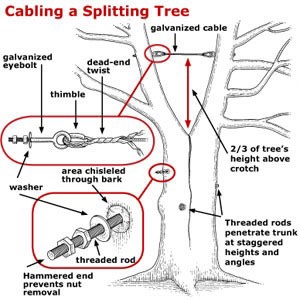
Diagram showing tree cabling support system
Tree cabling diagram showing cable placement between co-dominant stems
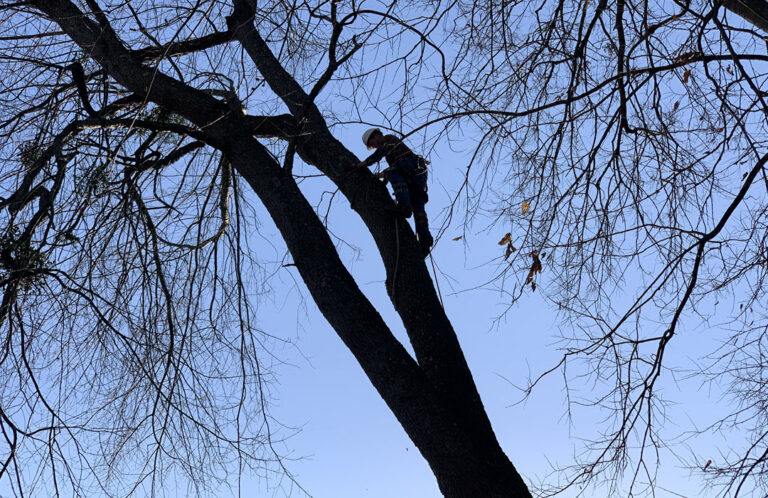
Arborist climbing a tree for service
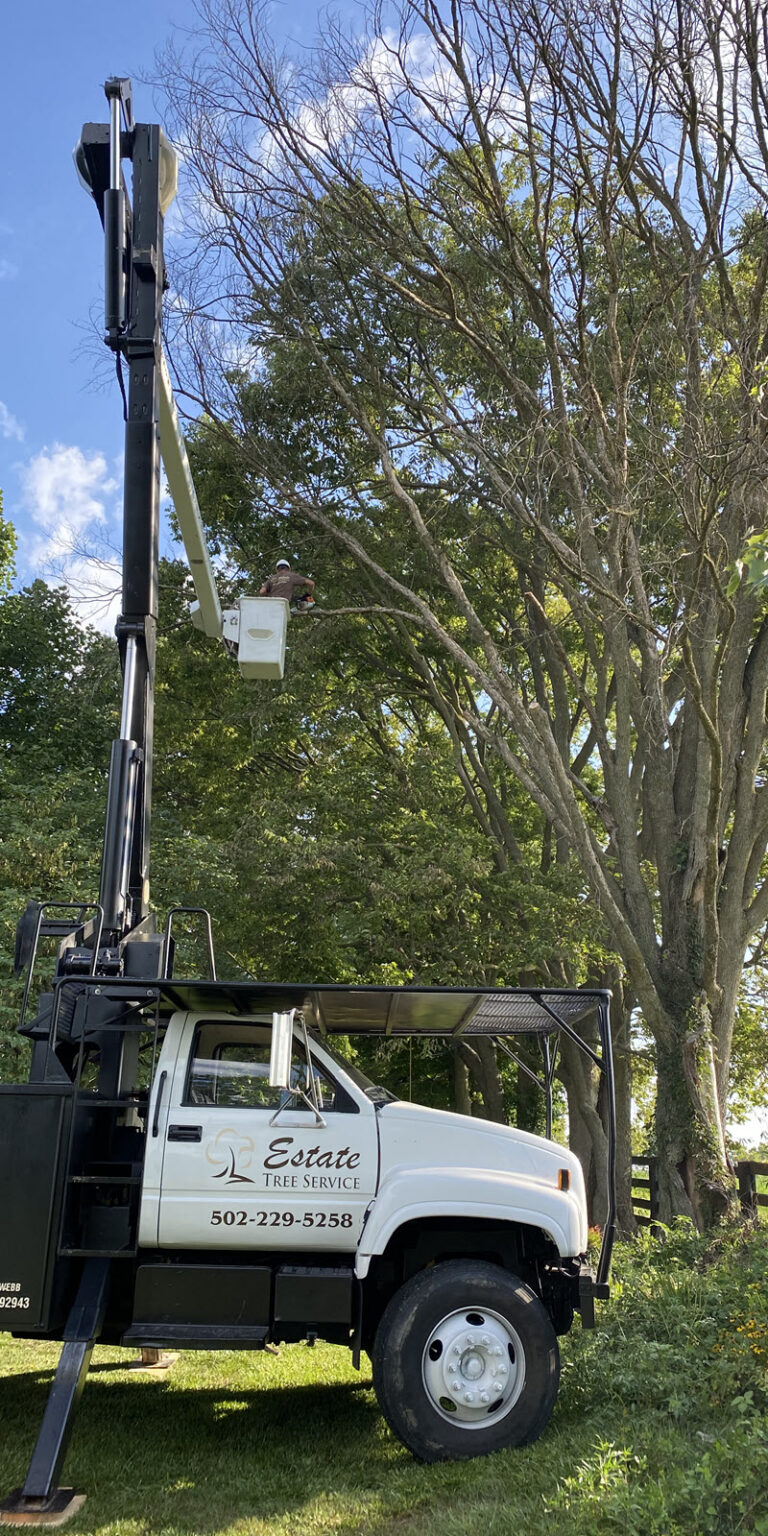
Estate Tree Service bucket truck

Frequently Asked Questions

Signs include a visible split between two main trunks (co-dominant stems), large limbs extending far from the trunk, cracks at branch junctions, or a tree that has already partially split during a storm. If your tree has a V-shaped crotch rather than a U-shaped one, it may be a candidate. We provide free inspections and will tell you honestly whether cabling will help or if removal is the better option.
No. Cabling is a risk-reduction measure, not a guarantee. It significantly reduces the chance of a structural failure by supporting weak points, but extreme weather, internal decay, or root problems can still cause a tree to fail. We make sure you understand the limitations before any work begins.
High-quality steel cables typically last 10 years or more, depending on the tree’s growth rate and environmental conditions. We recommend periodic inspections — usually every 2-3 years — to check tension and hardware condition. Cables may need adjustment or replacement as the tree grows.
Usually, yes. Cabling a tree is often a fraction of the cost of removing a large tree and grinding the stump. It also preserves the shade, beauty, and property value that a mature tree provides. We’ll give you both options in your estimate so you can make an informed decision.
Cables are installed high in the canopy between the stems or branches that need support. From the ground, they are barely noticeable. The hardware blends with the bark and branches over time. Your tree will look natural — just safer.

Related Services

Trimming, Shaping & Pruning

Tree, Shrub & Stump Removal

Annual Maintenance Plans

Worried About a Weak Tree?

Call us for a free inspection. We’ll assess your tree, explain your options, and give you a clear price — whether that’s cabling, bracing, or removal.

Call Now #ets-sticky-call { display: none; position: fixed; bottom: 20px; right: 20px; z-index: 9998; background-color: #ff6a00; color: #ffffff; text-decoration: none; border-radius: 50px; padding: 14px 22px; font-family: "Oswald", sans-serif; font-weight: 600; font-size: 16px; letter-spacing: 0.5px; text-transform: uppercase; align-items: center; gap: 8px; box-shadow: 0 4px 12px rgba(0,0,0,0.3); transition: background-color 0.2s ease, transform 0.2s ease; } #ets-sticky-call:hover, #ets-sticky-call:active { background-color: #e55d00; transform: scale(1.05); } #ets-sticky-call svg { flex-shrink: 0; } @media (max-width: 768px) { #ets-sticky-call { display: flex; } }