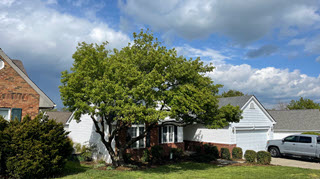
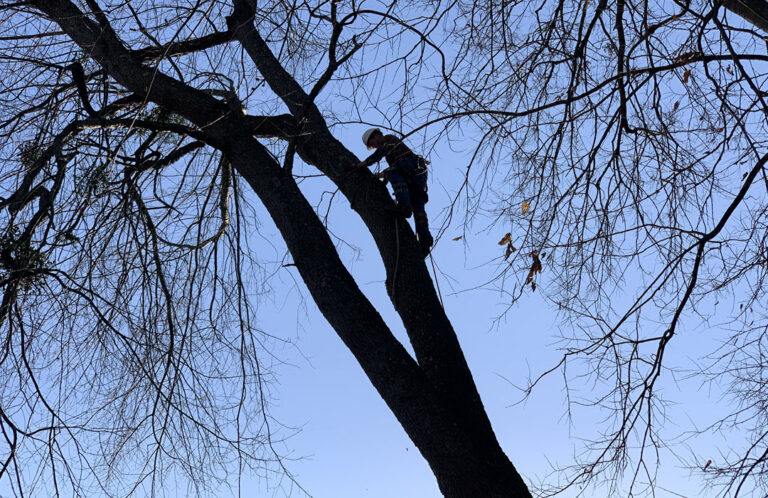
Trimming keeps your trees and shrubs healthy and looking their best. Done right, it strengthens branch structure, prevents disease, and extends the life of the plant. Done wrong, it causes lasting damage.
The best time to start is when a tree is young — trimming every one to three years for the first 10 to 15 years shapes strong branching habits and prevents costly problems later. Our crew knows which cuts to make and when to make them, so your trees grow the way they should.
What's Included
Crown thinning to improve light penetration and airflow
Deadwood removal to prevent disease and falling branches
Structural pruning for young trees to prevent future problems
Shaping and aesthetic trimming for mature trees and shrubs
Clearance trimming away from structures, power lines, and walkways
Flowering tree pruning timed to preserve next season's blossoms
Hazard reduction — removing weak or damaged limbs before they fall
Full debris cleanup and haul-away after every job
Why Professional Trimming Matters
Tree Health
Proper pruning removes dead and diseased branches, improves air circulation, and encourages strong new growth. It prevents minor issues from becoming major problems that shorten a tree’s life.
Safety
Overgrown or weakly attached branches are a hazard — they can fall on people, vehicles, roofs, and power lines. Regular trimming reduces the risk of damage during storms and high winds.
Curb Appeal
Well-maintained trees and shrubs are one of the biggest factors in property value. A properly shaped canopy, clean sight lines, and healthy foliage make your yard stand out in the neighborhood.
Our Trimming Process
1.Free Consultation We walk your property, evaluate each tree and shrub, and discuss your goals — whether that’s better clearance, improved health, or a cleaner look. You get a written estimate before any work begins.
2.Assessment & Timing We determine the best approach for each species — thinning, shaping, or corrective pruning. Flowering trees are trimmed within three weeks of blooming to protect next year’s blossoms.
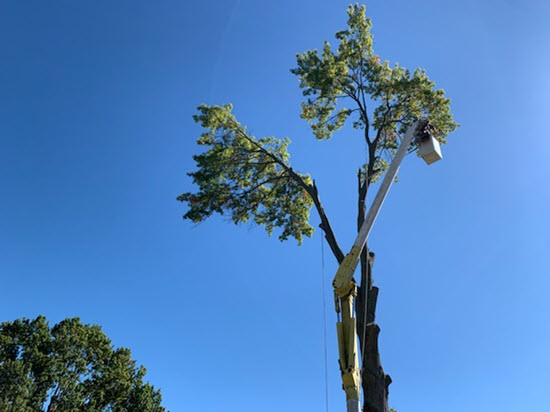
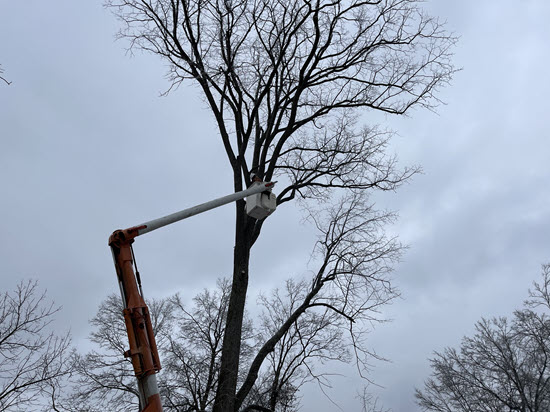
3.Professional Trimming Our crew makes precise cuts using proper techniques — never topping, never over-pruning. We use bucket trucks for tall trees and hand tools for detailed shaping work near structures and landscapes.
4.Cleanup & Haul-Away We remove all cut branches, leaves, and debris from your property. Your yard looks better when we leave than when we arrived.
It depends on the species. Most shade trees can be trimmed year-round, but late winter or early spring — while the tree is dormant — is often ideal. Flowering trees should be trimmed within three weeks of finishing their bloom to avoid cutting off next year’s flower buds. We’ll advise you on the best timing during your free consultation.
Trimming generally refers to cutting back overgrowth for appearance and clearance. Pruning is more targeted — removing specific branches to improve tree health, structure, or safety. In practice, most jobs involve both. Our crew evaluates each tree and applies the right approach.
No. Tree topping — removing the upper crown — is not an acceptable trimming method. It destroys the tree’s natural form, causes a burst of weakly attached regrowth, and actually makes the tree less safe over time. We never top trees. Instead, we use proper crown reduction and thinning techniques that maintain the tree’s structure and health.
Cost depends on the number of trees, their size, species, and accessibility. We provide free on-site estimates so you know exactly what to expect. Call us at (502) 229-5258 to schedule yours.
Young trees should be trimmed every one to three years for the first 10 to 15 years to establish good structure. Mature trees typically need trimming every three to five years, depending on species and growth rate. We can set up an annual maintenance plan so you never have to think about it.
Ready to Shape Up Your Trees?
Call us today for a free consultation. We'll walk your property, recommend the right approach for each tree, and give you a clear price.